Diverse MindsFree resources
Free resources
Free guides for families and communities
Practical, easy-to-read guides you can download, print and share. They are free to use, and we will add more over time.
For parents and carers
Guides to help you understand your child and find the right support.
-
A parent's guide to ADHD
What ADHD is, how it can look different in girls, and practical ways to support your child.
What's inside
A helpful resource for understanding ADHD in children and young people. It explains what ADHD is, how it can look different in girls, and practical ways to support your child at home, in education and as they grow.
- What is ADHD?
- ADHD in girls
- Signs of inattention, hyperactivity and impulsivity
- The impact of masking
- Common strengths
- Support you can give
- Organisations to contact
-
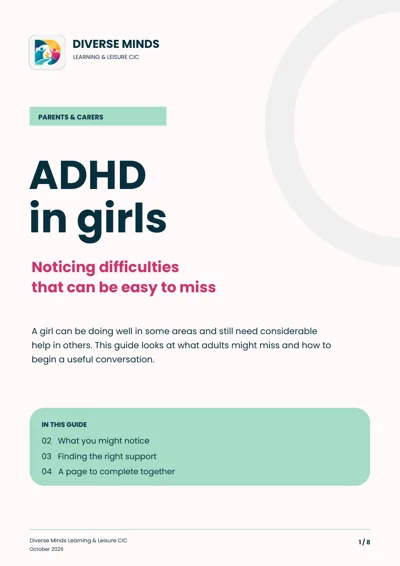
ADHD in girls
Noticing difficulties that can be easy to miss, and how to begin a useful conversation.
What's inside
Noticing difficulties that can be easy to miss. A girl can be doing well in some areas and still need considerable help in others. This guide looks at what adults might miss and how to begin a useful conversation.
- What you might notice
- Finding the right support
- A page to complete together
- The figures, with their sources
- Further support in Scotland
-
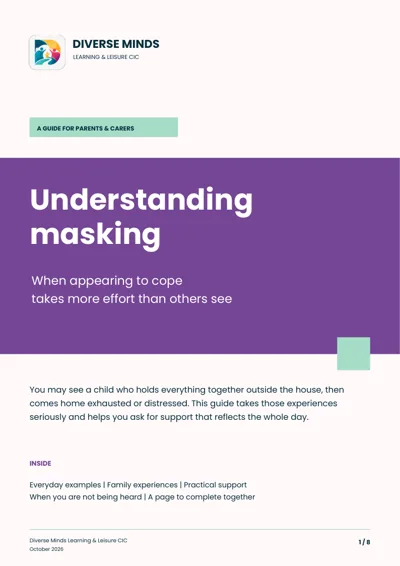
Understanding masking
When appearing to cope takes more effort than others see, and how to ask for the right support.
What's inside
You may see a child who holds everything together outside the house, then comes home exhausted or distressed. This guide takes those experiences seriously and helps you ask for support that reflects the whole day.
- Everyday examples
- Family experiences
- Practical support
- When you are not being heard
- A page to complete together
- Sources and support
-
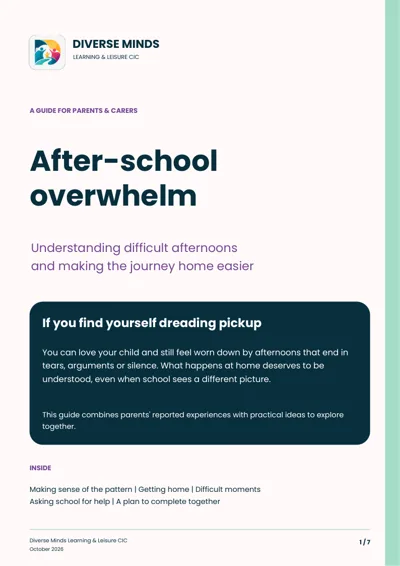
After-school overwhelm
Understanding difficult afternoons and making the journey home easier.
What's inside
You can love your child and still feel worn down by afternoons that end in tears, arguments or silence. What happens at home deserves to be understood, even when school sees a different picture.
- Making sense of the pattern
- Getting home
- Difficult moments
- Asking school for help
- A plan to complete together
- Sources and support
-
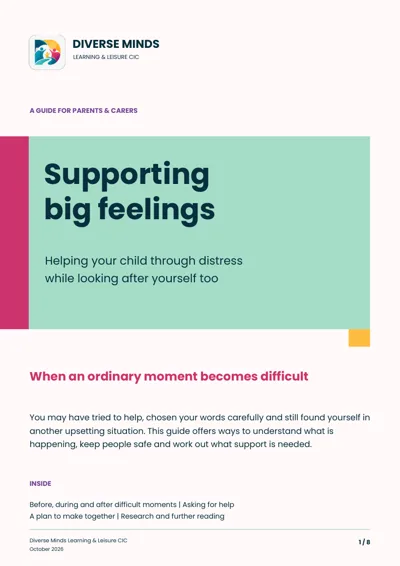
Supporting big feelings
Helping your child through distress while looking after yourself too.
What's inside
You may have tried to help, chosen your words carefully and still found yourself in another upsetting situation. This guide offers ways to understand what is happening, keep people safe and work out what support is needed.
- Before difficult moments
- During difficult moments
- Afterwards
- Asking for help
- A plan to make together
- Research and further reading
-
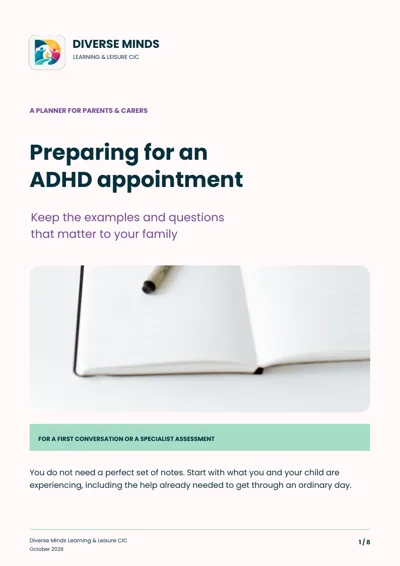
Preparing for an ADHD appointment
A planner to keep the examples and questions that matter to your family.
What's inside
For a first conversation or a specialist assessment. You do not need a perfect set of notes. Start with what you and your child are experiencing, including the help already needed to get through an ordinary day.
- Why your observations matter
- Notes on everyday life
- The wider picture
- A page for your child
- Questions to ask at the appointment
- If the process is difficult
- Sources and further reading
-
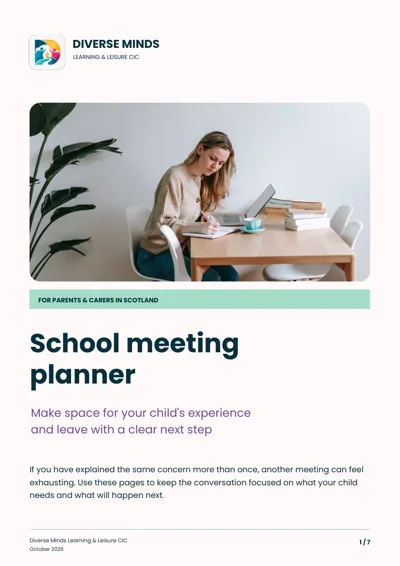
School meeting planner
Make space for your child's experience and leave with a clear next step.
What's inside
For parents and carers in Scotland. If you have explained the same concern more than once, another meeting can feel exhausting. Use these pages to keep the conversation focused on what your child needs and what will happen next.
- Before the meeting
- Your child's views
- What you want to raise
- Agreed actions
- After the meeting, with a follow-up email to adapt
- Sources and further reading
-
Supporting the overwhelm toolkits
How to offer activities, respond to concerns and follow up.
What's inside
A parent, carer and practitioner guide to the child and teen overwhelm toolkits. A companion to real conversations and in-person support.
- Using the two versions
- Safeguarding and urgent help
- Offering and adapting activities
- Following up in person
- Sources for all three booklets
For young people
Guides written for you, to read on your own or with someone you trust.
-
My voice matters
Getting your thoughts across and finding someone who will listen.
What's inside
You can have something important to say and still find it hard to explain. You can use this guide to choose how to share it, who to ask and what you want to happen next.
- Ways to share what you think
- If the first person does not listen
- Different parts of my life
- My page: what I want someone to know
- For adults, and further reading
-
When things get difficult
Understanding your reactions and finding the support you need.
What's inside
A difficult moment can leave you upset, angry, quiet or unsure what to do next. You can use these pages on your own or with someone you trust. There is no score, and you can leave anything blank.
- You can ask for help with this
- Eight parts of wellbeing
- If my feelings were weather
- Build your support menu
- What could help here?
- My plan for a difficult moment
- Help and further reading
-
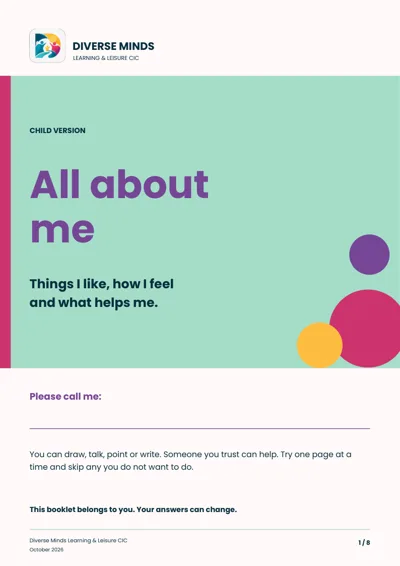
All about me: child version
Things I like, how I feel and what helps me.
What's inside
You can draw, talk, point or write. Someone you trust can help. Try one page at a time and skip any you do not want to do. This booklet belongs to you. Your answers can change.
- My favourite things
- A day in my world
- Help me tell you
- When things feel too much
- What helps me
- Please read my page
- For the person supporting this booklet
-
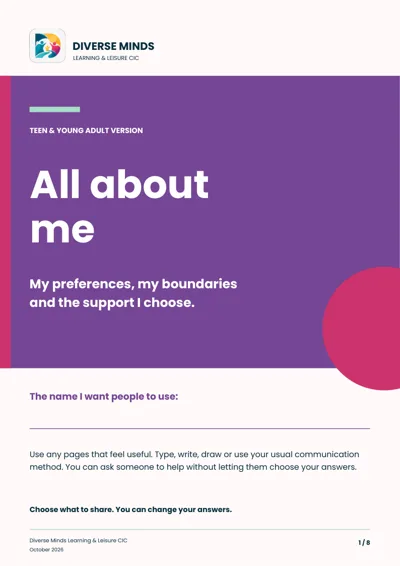
All about me: teen and young adult version
My preferences, my boundaries and the support I choose.
What's inside
Use any pages that feel useful. Type, write, draw or use your usual communication method. You can ask someone to help without letting them choose your answers. Choose what to share. You can change your answers.
- What matters to me
- Where my energy goes
- Communication and boundaries
- What affects how I feel
- Support and independence
- What I want you to understand
- For the person supporting this booklet
-
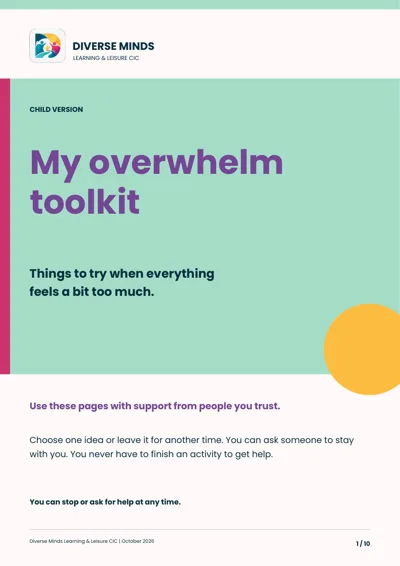
My overwhelm toolkit: child version
Things to try when everything feels a bit too much.
What's inside
Use these pages with support from people you trust. Choose one idea or leave it for another time. You can ask someone to stay with you. You never have to finish an activity to get help.
- You can ask for help now
- Pick what suits you
- Gentle breathing, only if you want to
- Give your attention a little job
- Make something without a plan
- Try a small change
- One thought, one next step
- A help card to show or point to
- My people and choices
-
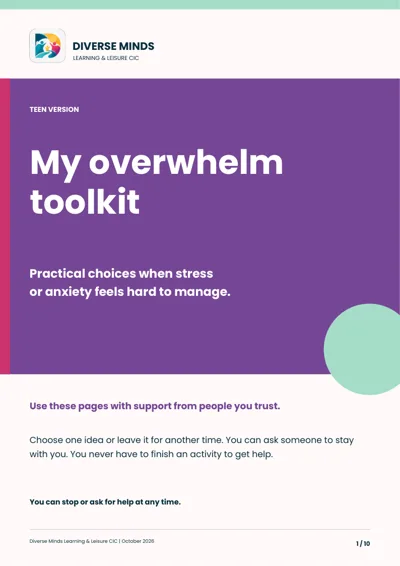
My overwhelm toolkit: teen version
Practical choices when stress or anxiety feels hard to manage.
What's inside
Use these pages with support from people you trust. Choose one idea or leave it for another time. You can ask someone to stay with you. You never have to finish an activity to get help.
- You can ask for help now
- Pick what suits you
- Gentle breathing, only if you want to
- Give your attention a little job
- Make something without a plan
- Try a small change
- One thought, one next step
- A help card to show or point to
- My people and choices
-
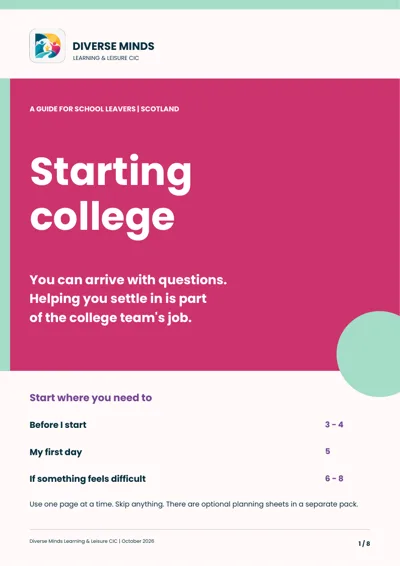
Starting college
A guide for school leavers in Scotland, from your first visit to your first day and beyond.
What's inside
You can arrive with questions. Helping you settle in is part of the college team's job. Use one page at a time and skip anything.
- You can take your time
- Get to know the place
- Tell someone what helps you
- Know the next few steps on your first day
- Things that can happen
- Get help with what is in the way
- When I need help
-
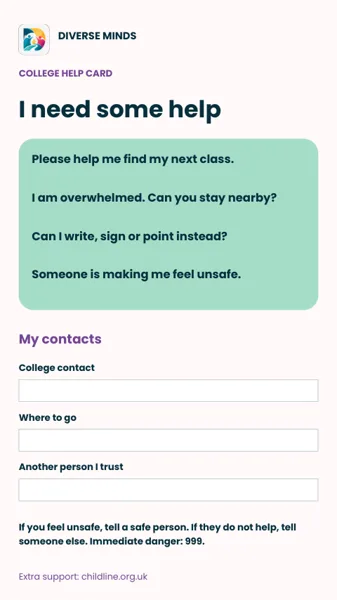
College help card for your phone
Save it to your phone and show a line when words are hard.
What's inside
A one-page card to keep on your phone at college, with lines you can show, space for your contacts and what to do if you feel unsafe. It goes with the Starting college guide.
- Lines to show when you need help
- My contacts
- If you feel unsafe